 Earth Day is April 22, and with the future of our planet in mind, we’re highlighting regenerative agriculture work happening across the state to prioritize this important shift back to restoring the land that feeds us.
Regenerative agriculture is an umbrella term for a variety of growing, ranching, and land stewardship practices that have been developed and refined by Indigenous peoples around the world since humans shifted from nomadic hunting to farming communities.
The term “regenerative agriculture” was coined by the Rodale Institute in the 1980s, and there is now a certification process for farms that are looking to add another certification to their lineup. However, the general standard of regenerative agriculture centers on practices that benefit the whole ecosystem–starting with the soil under our feet and extending to the humans stewarding the land.
Soil health is the heart and soul of regenerative agriculture. With the introduction of pesticides, monoculture farming, tractors, and increased ranching practices during the 20th century, much of our nation’s farmland has been stripped of its nutrients and ability to restore itself. However, with the nation’s growth, production and output became the priority in conventional agriculture practices without much thought to the land and soil needed to maintain it. With the onset of climate change, scientists have found that healthy soil is also key to capturing harmful greenhouse gases, including carbon dioxide, methane, and nitrous oxide. Agriculture in the United States makes up 10% of greenhouse gas emissions, largely caused by animal waste, overuse of nitrogen fertilizers, and soil degradation. After decades of conventional practices as the norm, a shift back to practices that keep the health of the planet at the forefront is key to the future of farming and ranching.
In the state of New Mexico, prioritizing regenerative agriculture and regenerative ranching practices is an issue that carries across party, cultural, and generational lines. In 2018, the New Mexico Healthy Soil Working Group (NMHSWG) was founded, and its first point of action was to introduce legislation at the state level to address soil health across New Mexico. After nearly a year of interviewing farmers, producers, tribes, land-grant and acequia communities, engaging members and attending agriculture conferences across the state, and developing a powerful coalition of supportive stakeholders statewide, the NMHSWG successfully introduced and advanced Senate Bill 218, and the Healthy Soil Act was enacted in 2019. This important legislation created a comprehensive Healthy Soil Program, including a significant grant program, which is administered by the New Mexico Department of Agriculture (NMDA). At the time, New Mexico was only one of three or four states to adopt a bill prioritizing soil health statewide.
The NMHSWG is a grassroots nonprofit group that continues to center its work on advocacy, education, connection, and assisting farmers, ranchers, and other land stewards in accessing grants and other key resources to shift their practices toward regenerative agriculture.
After the enactment of the Healthy Soil Act, the New Mexico Department of Agriculture (NMDA) launched the Healthy Soil Program, whose purpose is “to promote and support farming and ranching systems and other forms of land management that increase soil organic matter, aggregate stability, microbiology, and water retention to improve the health, yield, and profitability of the soils of the state.” The primary way the NMDA delivers on this purpose is by offering grants for farmers, ranchers, and other land managers including certain governments–to improve how they manage the land in their care.
The NMDA’s Healthy Soil Program doesn’t introduce new ways of managing land; rather, the program encourages land managers to get back to basics by mimicking nature more closely. That idea is evident in the five soil health principles central to the Healthy Soil Act, to NMDA’s Healthy Soil Program, and to the projects funded through its grants:
- Keeping soil covered
- Minimizing soil disturbance on cropland and minimizing external inputs
- Maximizing biodiversity
- Maintaining a living root
- Integrating animals into land management, including grazing animals, birds, beneficial insects or keystone species such as earthworms
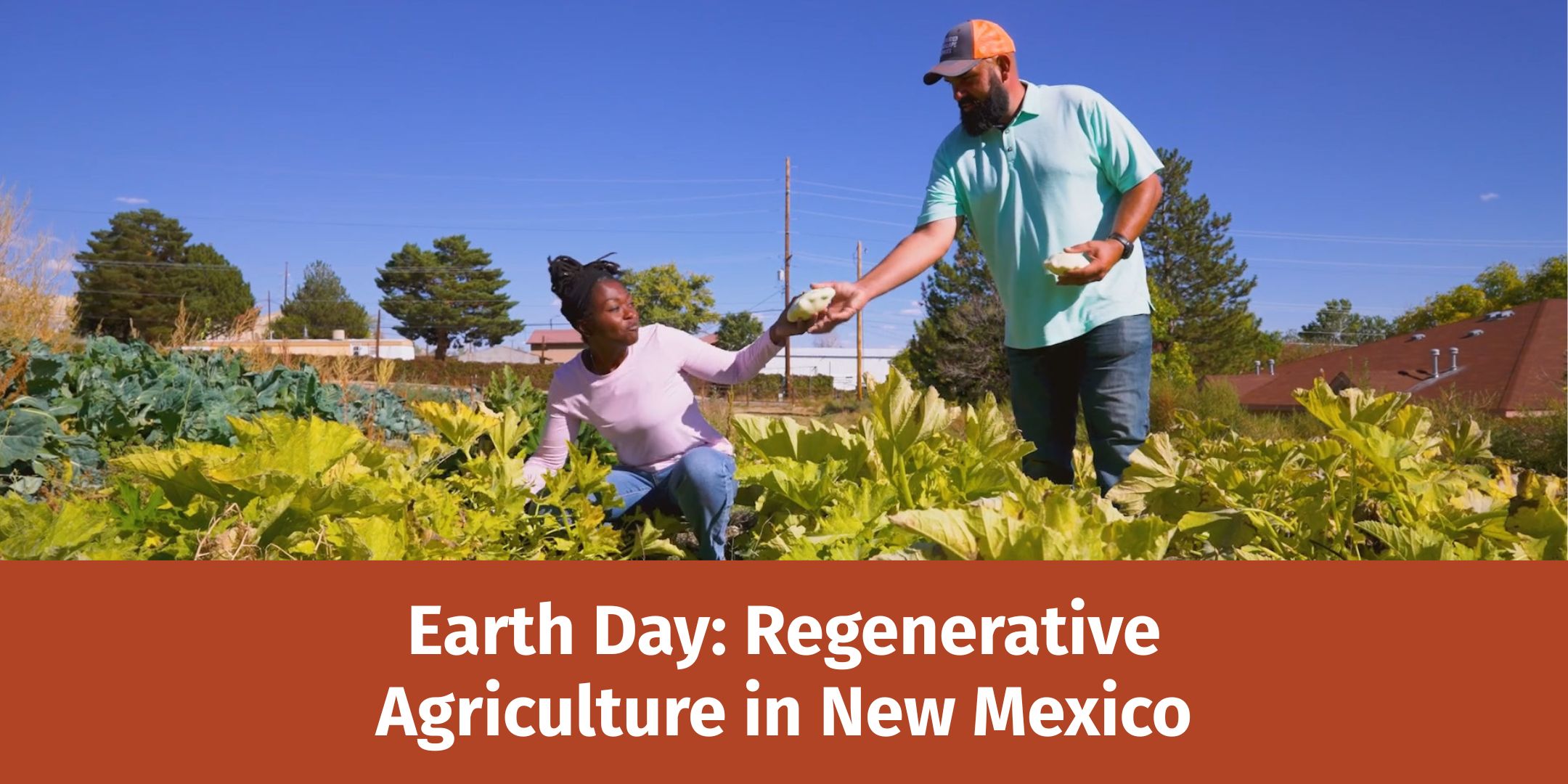
Since the beginning of the Healthy Soil Program, more than 250 grants have been awarded for implementation of on-the-ground projects across the state. One such grantee from this program is Gathings Gardens, a family-run farm in the northwest corner of the state near Farmington. When the Gathings family first started their farm in 2023, they set out with the intention of incorporating regenerative agriculture practices from the onset. They obtained land that had formerly produced alfalfa, but had been fallow for 25 years, so the soil was fairly depleted, and their first year of growing was disappointing. Because of their location, pre-produced compost was too expensive for the quantity they needed. In 2024, Gathings Gardens applied for and received a grant from NMDA’s Healthy Soil Program and was able to secure the amount of compost needed to start building the soil back to health.
Year two of growing was more successful. Other regenerative practices were incorporated, such as adding natural soil amendments, crop rotation, and cover cropping, as well as adding native grasses and plants to keep topsoil protected and encourage more natural biodiversity. Year three was even more successful, and they continue to learn and grow with the land, while sharing what they learn with their community.
Gathings Gardens is one example of many land stewards across the state that are prioritizing farming practices that work to benefit everyone they touch.
While writing this story, we interviewed Robb Hirsch with the New Mexico Healthy Soil Working Group, Katie Crayton with NMDA’s Healthy Soil Program, and Jeremy Gathings of Gathings Gardens in Aztec.
We asked both Robb and Katie two questions: Since the start of the Healthy Soil Program, what successes have you seen around the state, and what are areas that can still be improved?
Successes:
Robb: It’s been great to see New Mexico take such a leadership role when it comes to healthy soil and regenerative agriculture. Communities throughout the state, rural and urban alike, are united around soil health. One example of this is when we (and our partners) passed the Healthy Soil Tax Refund Contribution Option. The vote in the New Mexico legislature was unanimous in its support. This initiative gives New Mexico residents the chance to donate all or a portion of their hard- earned tax refund dollars to the state’s Healthy Soil Program. Since its inception, over 600 people every year from all around New Mexico give to this program, which then provides grants to the producers in the state who are dedicated to soil health principles on their working lands.
There are many other such examples of unity and leadership that are increasing general awareness of this issue. Awareness leads to action, and consumers, along with producers, are a big and really important voice calling for the shift. But at the end of the day, it’s the producers that are driving the change. Producers sharing their experiences and the improvements they’re seeing on their land and in their products is the evidence other producers need to also make the shift to regenerative practices.
Learn more about giving to the Healthy Soil Tax Refund Contribution Option here.
Katie: At the individual level, former grantees talk about how their soil has improved thanks to the soil health principles: water filters into the soil more quickly, meaning less is lost to erosion and evaporation, and the soil is less compacted, meaning roots penetrate more easily. We’ve heard grantees talk about how the positive changes in their soil have rippled across other parts of their lives, as Eastern New Mexico farmers Toby and Kimberly Bostwick shared in this video.
At the collective level, more people seem to be talking about soil health and thinking about how to incorporate the soil health principles on the land they manage. They’re hearing how soil health can improve daily life for farmers and ranchers, as well as the long-term prospects for their farms and ranches. Improving your soil health means improving your resilience to drought and other weather extremes, as well as wind and water erosion, and plus pressure from pests and weeds. With those improvements come savings in time, money, and peace of mind.
Improvements:
Robb: We’d like to see more focus on transitioning away from nitrogen-based fertilizers and increased movement toward more natural and sustainably productive alternatives. The price of nitrogen fertilizers, especially now, is expensive for farmers, and there can be severe public health consequences, while the pollution from the associated toxicity is harmful to the environment. An increasingly viable alternative that is showing itself to be more cost-effective and productive over time, as well as most beneficial to the land, is switching to compost while integrating the soil health principles mentioned by NMDA earlier in the article.
Katie: We’re always looking to further our outreach efforts, especially given the breadth of parties that can apply for NMDA’s Healthy Soil Program grants: tribal governments, acequias, land grants, soil and water conservation districts (SWCDs), and New Mexico State University’s (NMSU’s) Cooperative Extension Service, plus farmers, ranchers, and other land managers.
Aside from our grants, we know that seeing is believing, so there will always be a need for soil health events. Once you see a rainfall simulator in action, for instance, you can’t unsee how differently a downpour affects land that’s been tilled versus land that’s recovering from tillage, or land that’s been cover-cropped versus land left fallow. Fortunately in New Mexico, there are several partner agencies and organizations hosting events so that more people can see firsthand how the land improves when we embrace the soil health principles.
And we asked Jeremy of Gathings Gardens what it is about farming that keeps him tied to this role in the world, a role that is full of challenges, but also many successes.
Jeremy: It’s really a passion project. We all enjoy being in the fields, getting seeds started, being connected to the land, watching new insects show up, and observing the small shifts and changes that happen as we improve and learn more each year. We have a small peach orchard on the farm and got connected with students at the University of New Mexico (UNM) who did a vocational field trip to the farm last year. There was a lot of pride and joy in watching the students taste some of the best peaches of their lives, while knowing we were able to provide that to our community.
What’s next for the New Mexico Healthy Soil Working Group:
In partnership with the NMDA, they will be featuring and highlighting five regenerative agriculture soil health leaders focused on soil health across the state. One such highlight will focus on the use of virtual fencing in ranching.
The Healthy Soil Working Group also coordinates and initiates Field Days that happen around the state throughout the year — learn more HERE.
The Healthy Soil Working Group is working on advancing composting in New Mexico, which involves expanding policy, partnerships and education around composting statewide, with an emphasis on rural communities. To get involved, go HERE.
You are also welcome and encouraged to sign up for their newsletter for further updates and to join the movement for soil health in New Mexico (linked below).
WEBSITE | NEWSLETTER | EMAIL
What’s next for the NMDA’s Healthy Soil Program:
The NMDA’s Healthy Soil Program and NMSU’s Cooperative Extension Service are teaming up for a second statewide soil health conference this fall. They hosted the first such conference in the summer of 2024 and decided to make it an every-other-year event. About 100 people attended the inaugural conference and offered many ideas for an even better event going forward. As details of the 2026 conference begin to take shape, they’ll announce them via the Healthy Soil Program’s weekly e-newsletter. Readers can self-subscribe to their weekly newsletter using the form at the bottom of the Healthy Soil Program’s homepage, or by sending an email with “SUBSCRIBE” in the subject line.
What’s next for Gathings Gardens:
Spring planting and harvesting! Gathings Gardens plans for their farm to be in production from spring to fall, with an intentional break during the colder months so they can recuperate and prepare for the next season. Gathings Gardens focuses their production on local farmers’ markets and sells to local schools and senior centers through the New Mexico Approved Supplier Program. Learn more about them and sign up for their newsletter below.