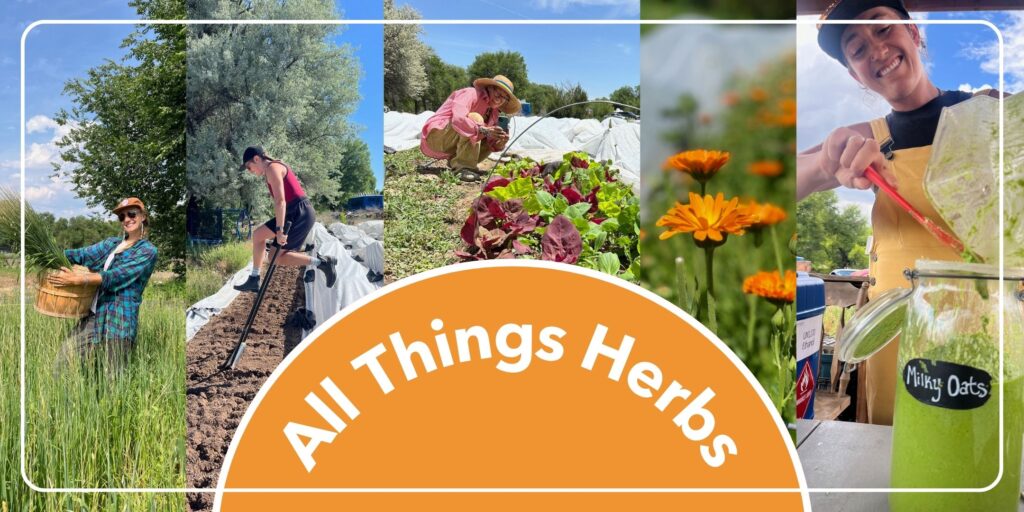
Image: Annie’s Herbs Farm and crew members: Ellie Chairez-Keene, she/her, Billie Secular, they/them and Annie Krahl, she/her
Herbs, both culinary and traditionally used for wellness, can offer a range of benefits for farmers, customers and the land, and may be a valuable addition for diversifying revenue streams. We spoke with two New Mexico farms that focus largely on herbs to learn more about the opportunities and challenges of growing in arid Southwest climates. Special thanks to Annie Krahl of Annie’s Herb Farm in La Mesilla and Olivia of Good Dirt Farm in Albuquerque for sharing their experiences and insights.
Annie has been farming for more than a decade and found her niche after years of vegetable production by focusing more closely on working with the land. She later shifted her focus to herbs and, seeing a gap in the market, started her own farm. Now, eight years into operating Annie’s Herb Farm, she brings valuable insight into what it takes to grow herbs in New Mexico. The farm offers fresh greens, dried herbs, teas and value-added products such as tinctures and salves. Annie’s Herb Farm is also a queer, nonbinary, AFAB (assigned female at birth)-centered space.
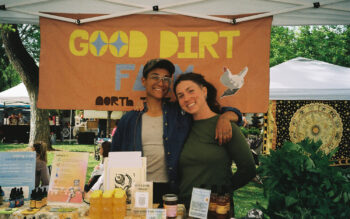
Image: Ellan and Olivia of Good Dirt Farm
Olivia and co-farmer Ellan started Good Dirt Farm, a small farm and gathering space, three years ago. Both brought experience from vegetable and fruit and flower production, but were drawn to herbs for a variety of reasons. They maintain day jobs to support themselves and the farm and have structured their operation to allow for growing, education, and community connection. Good Dirt Farm also produces flowers, plant starts and seeds.
Benefits of Incorporating Herbs
One of the key advantages of herbs is their versatility on the farm, whether or not they are grown for direct sale. Herbs can contribute to soil health, support moisture retention, attract beneficial pollinators, and function as effective cover crops during fallow periods.
Herbs often require a different approach than vegetables and can demand more time and attention to detail. However, at any scale, they can play a valuable role in supporting overall farm resilience and diversification.
- Herbs often require a slower pace. Herbs require a different kind of planning than vegetables. Many herbs are perennials and will come back every year once well established. Even herbs that are annuals can usually be harvested many times before the plant is done. The key is to take the time (sometimes a year or two) to get these plants established in the right spot on your land.
- Herbs may be less physically demanding. With fewer physical demands and less frequent bed turnover, herbs can be a great way to farm with reduced physical strain. Annie cited fall root harvest as the most physically demanding part of the year.
- Herb seeds are not always bred for cultivation. Most vegetable seeds have been bred for consistent cultivation. However, depending on the variety, many herb seeds require activation of some kind to help them sprout. This can include processes like scarification (the process by which a seed’s hard coat is broken down to allow water to penetrate and the seed to germinate); or stratification (the process by which a seed is exposed to moist, cold, or warm conditions in order to break dormancy). Taking time to research this ahead of time will help with the planning process and provide a better chance of success.
- Herbs can support soil health. Some herbs may contribute to nitrogen fixers that help regenerate the land, while others can be used alongside vegetables in diversified systems. Herbs can be paired with different plants, flowers and vegetables to help distribute pollinators around your farm. Herbs such as milky oats can be used as cover crops when land is resting, but can also be harvested and used for beneficial herbal products and may also be harvested as a value-added crop.
- Herbs can command higher prices than produce. This is especially true for certain specialty herb products and dried herbs. For instance, specialty herbs can sell in the $30 to $40 per pound price range, versus $4 to $16 per pound price range for vegetables and fruit. Prices vary on what kind of herb, and if you’re selling at a farmers market or wholesale market.
- Herbs can be sold year-round and help reduce waste. Herbs can be sold fresh, dried, as tea blends, and more depending on your market. Any fresh herbs that don’t sell can easily be converted into dried herbs and sold at a later date. Selling dried herbs during winter months can help provide income when fresh products are less available.
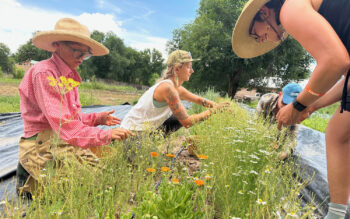
Image: Annie and crew members Ellie Chairez-Keene, she/her and Billie Secular, they/them
Herb Farmer vs. Herbalist
While speaking with Annie and Olivia, both noted that they are not herbalists. However, this is not a requirement for growing herbs. They emphasized the importance of taking the time to understand and learn about herbs before selling commercially.
Herbs, especially those traditionally used for wellness, are often associated with a range of users, and farmers should choose varieties they know well and have personal experience with. Sharing their personal experiences is a great way to connect with customers as well.
Olivia and Annie also noted the value of selecting approachable, widely recognized herbs for everyday use. Most people experience common concerns such as digestion, stress, and seasonal discomfort which help inform the varieties Annie’s Herb Farm and Good Dirt Farm choose to grow. Both farms encourage customer education and learning from their customers while working to refine the right mix of herbs and value-added products for their operations.
Tips Before You Get Started
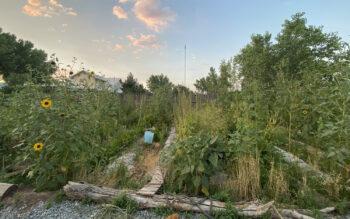
Image: Good Dirt Farm
As is common in most farming practices, herb farming takes a degree of trial and error and experimenting with where plants grow best. Annie stated, “To be a good herb farmer you kind of have to throw the book away. Take a year just to learn the land and where things grow. Herb farming is not a quick-turn process, go slowly and with curiosity and it will pay off in the long run. Give yourself that grace in the beginning to grow into herb farming.” With that in mind, here are some additional tips from Annie and Olivia specific to herb farming in New Mexico.
- Most farming guidebooks and online resources are not written for the Southwest region, so talk to other farmers in your area and note that an herb that is common in Oregon, may not do as well in New Mexico. Similarly, an herb that does well in northern New Mexico may not do as well in southern New Mexico.
- Use row tunnels or similar methods to keep plants safe from weather. New Mexico is often subject to false springs, and this can help keep herbs alive through the winter and late freezes.
- Some growers report that moderate plant stress can increase essential oil concentration (similar to chile plants), which may influence flavor and aroma.
- Research and understand any rules, permits, and regulations around growing and selling herbs. There can be nuanced rules especially when it comes to producing value-added products whether you’re selling herbs as food or wellness products.
- Research the market. Are there local companies or buyers looking for wholesale accounts? Can your farm produce the amount they’re looking for? Should you explore value-added products like dried herbs, teas, tinctures, salves, and the like? What are the costs and prices? What equipment might you need to purchase if you plan to dry or preserve plants? Think it through as much as possible, then start.
- Research your customer base. Listen to both your community and growing conditions. What herbs grow well in New Mexico? What herbs are customers looking for? What uses or products are most in demand?
- Education is key. Selling at markets and/or local shops is a great way to meet customers face to face and start conversations. Selling at locations that accept SNAP/EBT can help reach new customers. Incorporating signs with information about the herbs can draw customers in and spark interest. Marketing and hosting community events on the farm are other ways to educate and meet new customers.
Herbs are valuable to both people and the land. With so many benefits, these plants can support farms and communities over time. A slow, steady approach is often most effective when working with herbs. However, if you give them the space to thrive, they will perform well over time.
Look for Annie’s Herb Farm at the Santa Fe Farmers’ Market this year. May is still a little early for fresh herbs in northern New Mexico; however, Annie said there are always volunteer plants available and is especially excited for the farm’s chamomile crop this year. WEBSITE | INSTAGRAM
Find Good Dirt Farm at the Downtown Growers’ Market this year–this is their first year at a farmers’ market–and follow their Instagram page for farm volunteer opportunities and community events. INSTAGRAM