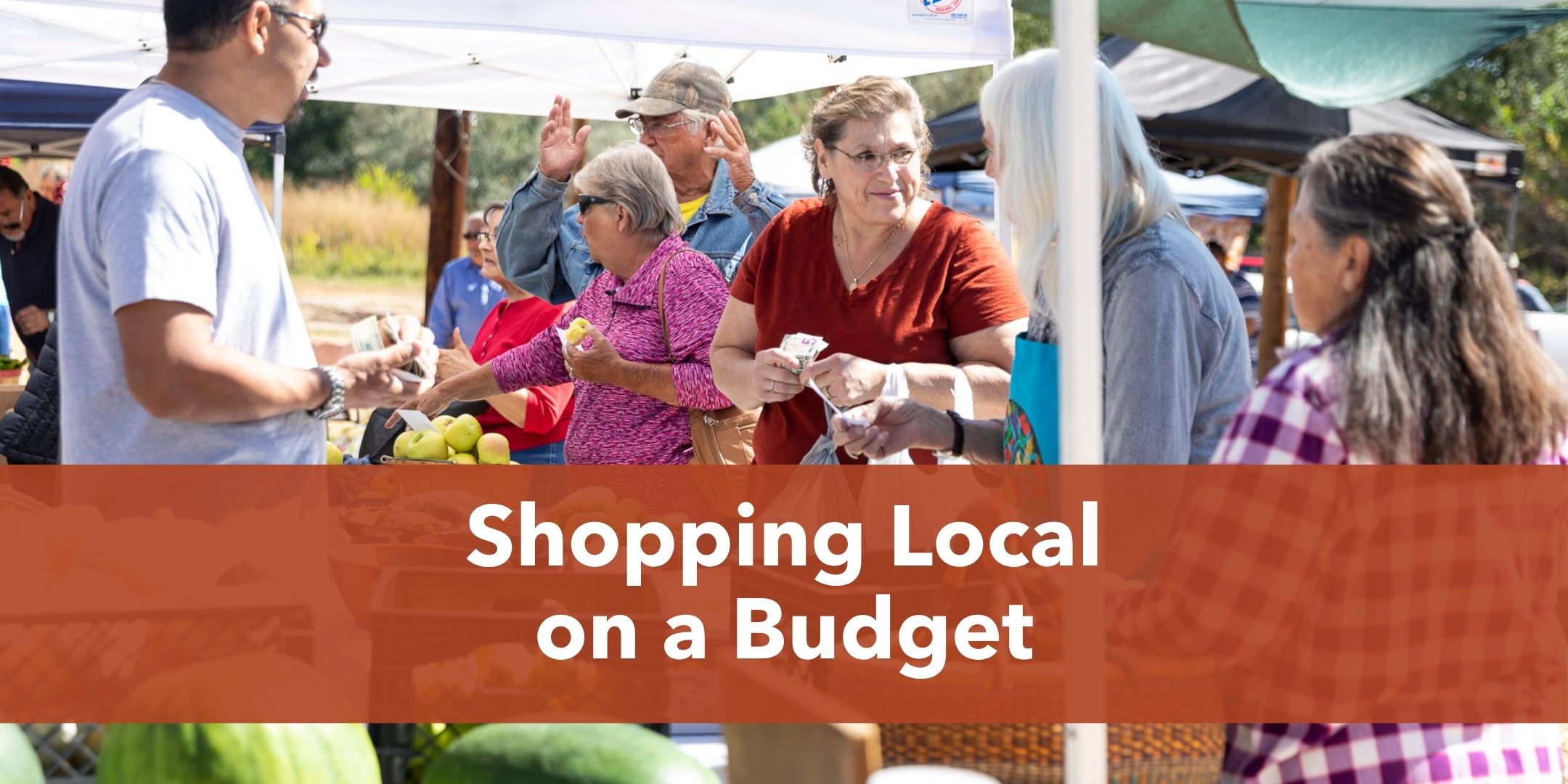
 Local food is for everyone, even if your budget is limited. We know wallets are tight these days for just about everyone. However, prioritizing food that is grown locally benefits everyone involved and keeps resources tied to our local communities. We’ve gathered a list of tips to stretch your budget while navigating your local farmers’ market.
- Know your budget: Prepare ahead of time so you know what your limit is for the day of shopping.
- Bring your own bags: Unlike a grocery store, most farmers don’t supply bags for customers. Bringing your own also allows you to store and transport your purchases safely depending on what you buy. Bring a cooler if you plan to leave your greens, meats, or dairy in a hot car after your market visit.
- Bring cash (small bills are helpful!): Cash is largely preferred at farmers’ markets. Cash gets around any processing fees that cards might incur. It’s also a great way to stay on budget. Bring only what you plan to spend and stick to it.
- Go early or go late: Arriving early gives you the best selection. Going late can sometimes provide opportunities for deals on products that didn’t sell, or that farmers have in excess.
- Walk the market first to compare prices and products. Take a stroll around the market to get a sense of prices and what is in season. Then determine which vendors you’d like to spend your money with.
- Shop the season: Look for products that are in season and abundant. When there is an overabundance of a product, farmers will sometimes offer a lower price to move it. It’s also a great way to stock up on seasonal favorites to preserve for later.
- Bring a list or ditch the list: If planning ahead is your thing then researching what is in season and coming up with a meal plan can be helpful to keep you on track. However, due to seasonal shifts and a desire to try something new, we also recommend ditching the list. Recipes are a great guideline, however, having the flexibility to adapt them based on what is available is also helpful in stretching your options. Can’t find potatoes, but someone has sweet potatoes or beets? Try a different root vegetable and see where the recipe takes you. Learning to adapt a recipe will also help you cook more often.
- Talk to farmers: Get to know your farmers! Ask questions like, “Do they offer bulk buying options?” which is usually less expensive. Ask if they have deals or discounts on any of their products or how to cook items you haven’t tried before. Some farmers are even willing to trade other goods or services for food.
- Buy in bulk: Bulk purchasing is a great way to cut back on costs. Talk to the farmers at your market to see if they offer bulk buying.
- Ask about seconds and don’t be afraid of “ugly” produce: Imperfect produce still holds the same flavor, nutritional value, and ability to nourish. However, farmers will sometimes offer deals on less- pretty produce that is overlooked by other customers.
- Preserve extra food: Save what you can’t eat for later. Freezing is the number one method for preserving most farmers’ market items. However methods such as dehydrating, canning, pickling, candying, and proper storage can also extend the life of food that can’t be eaten right away.
Here are some quick resources to get you started on how to preserve fresh foods. For processes such as canning, we recommend sourcing a class nearby before getting started. Local Cooperative Extension Services often offer classes and can be a place to start.
From New Mexico State University (NMSU)
From the NMFMA: Preserve the Harvest with these Five Simple Techniques
If you qualify for SNAP-EBT benefits, you’ll also have access to Double Up Food Bucks when shopping at participating farmers’ markets. This program doubles your SNAP spending, so you have twice as much to spend on local food. Plus, this year, customers with SNAP who shop at participating farmers’ markets will get to triple their spending with Bonus Bucks. Continue reading, or head to the Double Up Food Bucks website for more information on the 2026 Bonus Bucks program.